How to Beat the 8-Second Attention Span Plague

The average attention span of a goldfish is about 9 seconds. Humans in this day and age, on the other hand, hold attention spans of 8.25 seconds. Quite an astounding and disturbing fact.

This notorious short attention span aptly describes the kind of lifestyle everyone lives. It’s true that we can pay attention to a two-hour lecture if we choose to, but the fact put forward by so many scientists confirms that humans are very easily distracted.

It would be a lie to say otherwise. Because we are, in fact, easily distracted living beings. We’re listening to music one moment, and paying attention to a boarding commuter on the train the next. This is further proven by our tendency to bounce from one site to the next in our quest for needed information.

The attention span plague

Holding concentration in the digital world has grown increasingly difficult. If you’re having a hard time keeping your audience engaged in your site, you’re not alon… Read More
Are Amazon and Lyft Making Online Reviews Too Important?

I’m really not sure what I think about this, so I’d love to discuss with you on Facebook, Linkedin, Twitter or wherever…

As I write this, it’s Thanksgiving Week in the United States, which means millions of people will spend billions of dollars on Black Friday and Cyber Monday, and will temporarily say things like “doorbusters” without a trace of embarrassment.

As is the national custom, for almost every conceivable product there are approximately 1,417 competing brands and variations, making the actual purchase process an informational Spartan Race.

Hick’s Law states that the more choices we are faced with, the time necessary to make a selection goes up, not down. Increasingly, we try to shortcut this Paradox of Choice by consulting online reviews.

I’ve written extensively here on the power of online reviews, and the subject is a major component of my book, Hug Your Haters. Fundamentally, we trust online reviews.

Oft-cited research by BrightLocal suggests that 80% of customers trust at least some online reviews as much as they trust recommendations from a friend or family member.

And this isn’t just about e-commerce. Fully half of all in-store purchases start by r… Read More

How to Find and Report Stolen Pins on Pinterest

Do you add pinnable images to your blog posts? Are others using your images to drive traffic to their own content? In this article, you’ll learn how to identify and report copyright infringement for your pins on Pinterest. What Are Stolen Pinterest Pins? Have you ever discovered one of your pins in your Pinterest feed, […]

The post How to Find and Report Stolen Pins on Pinterest appeared first on Social Media Examiner.

Read More

How to Use Predictive Analysis to Improve Your Marketing Strategy

The world of technology is constantly evolving.

As a marketer, you need to stay up to date on new advancements that could benefit your company.

You don’t want to be left behind while your competitors forge ahead by adapting to the new world.

In my consulting work, I often see marketers and business owners who don’t believe these advancements are relevant to their marketing strategies. But this couldn’t be farther from the truth. New types of technology such as AI and machine learning are reshaping marketing.

While the technology is advancing rapidly, the basic concepts behind its applications remain unchanged. Everything is still focused on the customer.

Your marketing efforts need to reach your target audience. Your campaigns must find ways to speak to these people, and you can achieve that by personalizing and improving their experience.

Predictive analysis can make this possible.

Some of you may already be running campaigns and have strategies in place that focus on improving the customer experience and personalizing content.

However, predictive analysis technology will bring these ideas to the next level. You’ll see what I mean as I continue.

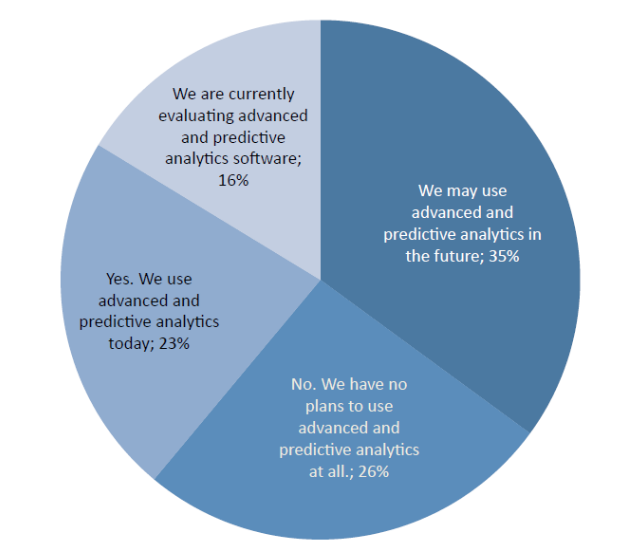
Surprisingly, only 23% of businesses are currently using advanced and predictive analysis tools:

That said, abou… Read More

The Chatbot Experience: 5 Ways to Know If You’re Chatting with a Human or Robot

The use and utility of online chat and chatbots, powered by improving levels of AI, are increasing rapidly. During these transitional times, it’s interesting to know with which we which are we interacting: a real human being or AI/chatbot?

We’ve developed five techniques for determining if you’re dealing with a real person or an AI/chatbot. Spoiler alert: the more you experiment with these, the faster the chatbots will learn and adapt.

Technique 1: Empathy Ploy

We believe today’s level of AI is lacking in cognitive empathy because emotions between humans are really hard to understand and explain. So, intentionally creating an empathetic dialogue with your human being or AI/chatbot can be revealing.

The Empathy Ploy requires you to establish an emotion-based position, and appeal to the human being or AI/chatbot at an emotional level.

The Situation: You are not happy — the most common basis for a customer service interaction.

Scenario 1: AI/chatbot

You: I’m not feeling well.

Chat reply: How can I help you?

You: I’m sad. 

Chat reply: How can I help you?

Scenario 2: a human being

You: I’m not feeling well.

Human reply: How can I help you? Do you need medical help?