Everything You Need To Know About Web Hosting

In order for your website to be live on the Internet, it needs to be hosted.

If you’re creating a website for the first time, move “set up hosting” to the top of your to do list, if it’s not already there.

Already own and operate a website? Did you rush into a plan without understanding how everything worked first? Maybe you feel like you’re fine with the host you picked at random. Makes sense — until you run into a problem with your website, you might not even think twice about your hosting plan. However, you don’t want to wait until that happens. It’s better to educate yourself on web hosting now so you can find the best option before anything goes awry. This will make your life much easier down the road.

Regardless of your situation, you’ve come to the right place. This beginner’s guide on web hosting will help you feel confident picking the host that’s right for you and your goals.

What is web hosting?

Let’s start with the basics. What exactly is web hosting? How does web hosting work?

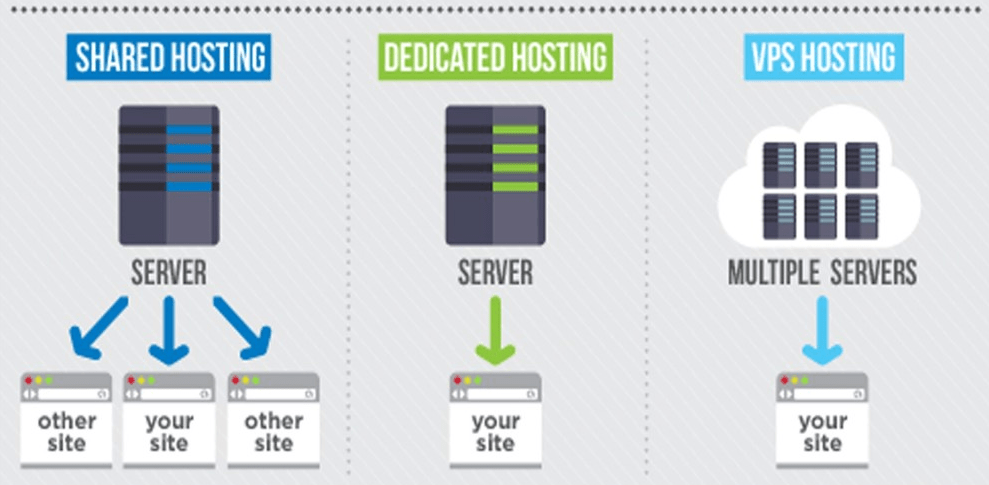
Websites are hosted on servers. In simple terms, a server is a very powerful computer that does only one or two simple services, hence the name server. The type of server we’re interested in stores websites and delivers them to people over the internet. Your web host provides the server space and the technology for your website to be accessed on the Internet. It’s the process that allows someone to search … Read More

Google Data Studio: How Marketers Can Build Powerful Dashboards

Want an easy way to interpret your analytics? Wondering how to create dashboards? To explore how to create dashboards with Google Data Studio, I interview Chris Mercer, a measurement marketing expert. He’s the founder of MeasurementMarketing.io and the Measurement Marketing Academy. Mercer explains how dashboards and analytics reports differ and when to use each one. […]

The post Google Data Studio: How Marketers Can Build Powerful Dashboards appeared first on Social Media Marketing | Social Media Examiner.

Read More

Redirects: One Way to Make or Break Your Site Migration – Whiteboard Friday

Posted by KameronJenkins

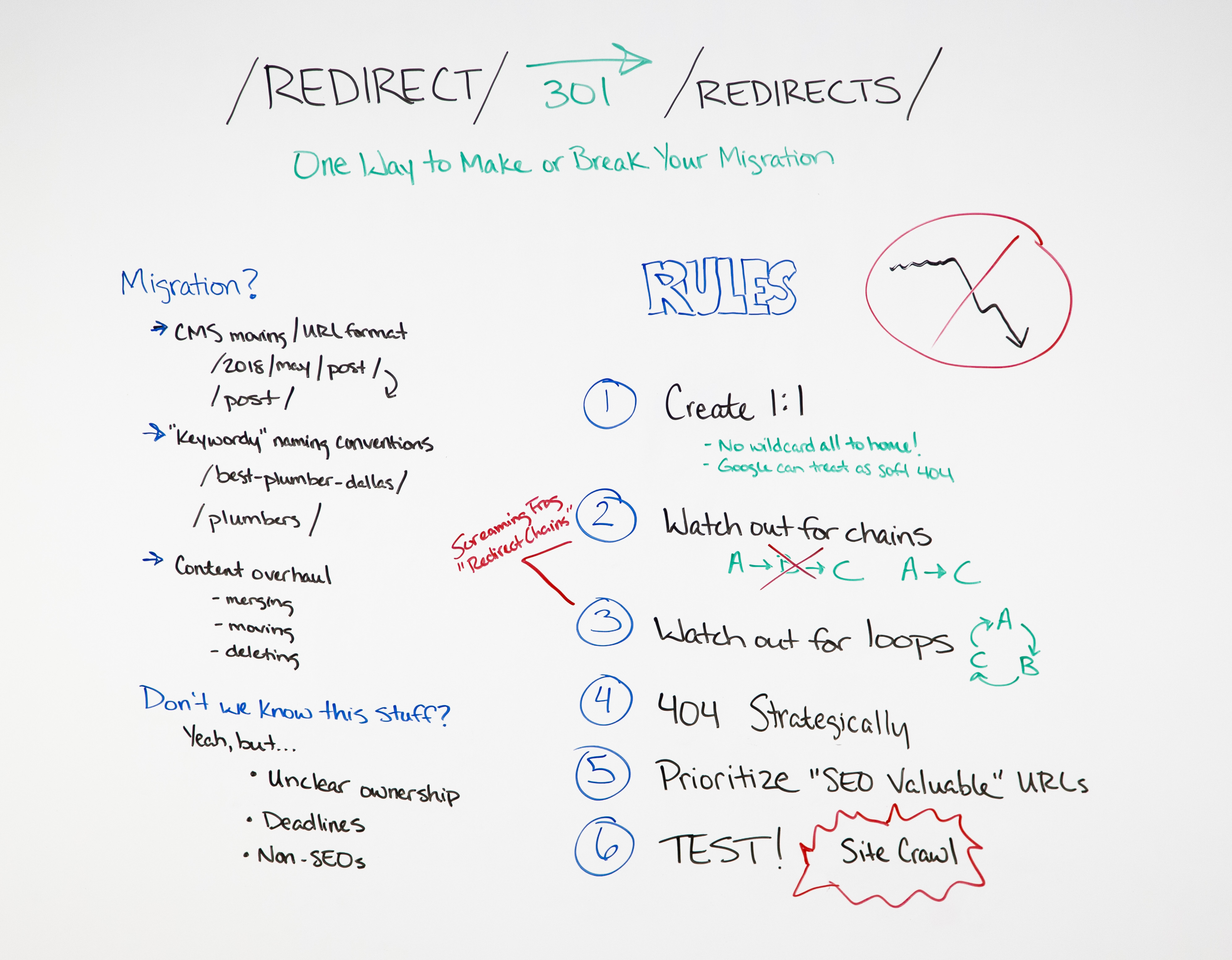
Correctly redirecting your URLs is one of the most important things you can do to make a site migration go smoothly, but there are clear processes to follow if you want to get it right. In this week’s Whiteboard Friday, Kameron Jenkins breaks down the rules of redirection for site migrations to make sure your URLs are set up for success.

Click on the whiteboard image above to open a high-resolution version in a new tab!

Video Transcription

Hey, guys. Welcome to this week’s edition of Whiteboard Friday. My name is Kameron Jenkins, and I work here at Moz. What we’re going to be talking about today is redirects and how they’re one way that you can make or break your site migration. Site migration can mean a lot of different things depending on your context.

Migrations?

I wanted to go over quickly what I mean before we dive into some tips for avoiding redirection errors. When I talk about migration, I’m coming from the experience of these primary activities.

CMS moving/URL format

One example of a migration I might be referring to is maybe we’re taking on a client and they previously used a CMS that had a default kind of URL formatting, and it was dated something.

Mapping the Overlap of SERP Feature Suggestions

Posted by TheMozTeam

From carousel snippets to related searches to “People also ask” boxes and “People also search for” boxes, the Google SERP is jam-packed with features that not only aid in keyword list creation but can help you better understand the topics your unique search landscape is structured around.

In fact, the increase of topics and entities as a way of navigating and indexing the web was one of the biggest developments in search in 2018. This is why we took 40,977 SERPS and stripped out every term or phrase from the aforementioned features — a small, first step toward making sense of Google’s organizational skills.

We wanted to see how much overlap might exist across these different SERP features. Does Google give us a lot of new keywords to work with or just suggest the same stuff over and over again? Do we need to pay attention to each SERP feature when building out our SEO strategy or can we overlook a few? We dug into a bunch of data in STAT to find out.

A little bit on topics and entities and SERP features

In September 2018, Google announced a new layer to its knowledge graph:

“The Topic Layer is built by analyzing all the content that exists on the web for a given topic and develops hundreds and thousands of subtopics. For these subtopics, we can identify the most relevant articles and videos—the ones that have shown themselves to be evergreen and continually useful, as well as fresh content on the top… Read More

7 Trends in Hiring Talent for Your Content Marketing Team in 2019

Are you ready to build and develop your content operations team in 2019? Kapost just released its Content Operations and Strategy Hiring Handbook, which offers statistics about what B2B companies look for when hiring content operations talent and tips for building out your team. 

For the report, Kapost surveyed 506 U.S. marketers and filtered responses to include only B2B-focused companies with dedicated content teams or employees. 

Here are eight major trends covered in the report that you need to be aware as you head into the new year.

1. Most Companies Are Hiring Specifically for Content Teams

Kapost notes that five years ago, very few organizations hired specifically for content operations. They cite a 2013 report from Altimeter that found very few of the companies had content divisions or staff with the word “content” in their titles.

Today, things look much different — 67 percent of respondents told Kapost that their organizations would hire specifically for content teams in the coming year. Three out of four organizations interviewed have dedicated content teams, and most also have content operations roles to manage the strategy and process b… Read More