Time to Act: Review Responses Just Evolved from "Extra" to "Expected"

Posted by MiriamEllis

I’ve advocated the use of Google’s owner response review feature since it first rolled out in 2010. This vital vehicle defends brand reputation and revenue, offering companies a means of transforming dissatisfied consumers into satisfied ones, supporting retention so that less has to be spent on new customer acquisition. I consider review responses to be a core customer service responsibility. Yet, eight years into the existence of this feature, marketing forums are still filled with entry-level questions like:

Should I respond to reviews?
Should I respond to positive reviews?
How should I respond to negative reviews?

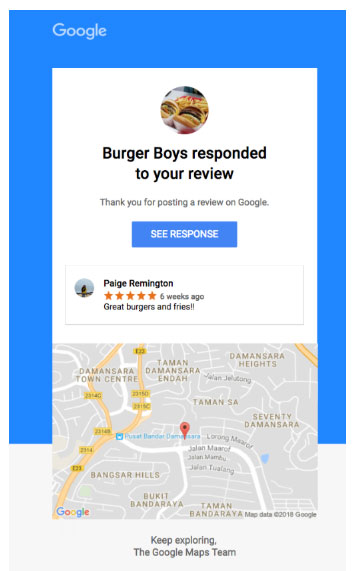
Over the years, I’ve seen different local SEO consultants reply in differing degrees to these common threads, but as of May 11, 2018, both agencies and brands woke to a new day: the day on which Google announced it would be emailing notifications like this to consumers when a business responds to their reviews, prompting them to view the reply.

Surveys indicate that well over 50% of consumers already expect responses within days of reviewing a business. With Google’s rollout, we can assume that this number is about to rise.

Why is this noteworthy news? I’ll explain exactly that in this post, plus demo how Moz Local can be a significant help to owners and marketers in succeeding in this ne… Read More

How to Make Your WordPress Site GDPR Compliant

The General Data Protection Regulation (GDPR), which is probably the biggest change so far in the field of data privacy regulation law, will come into effect on the 25th May 2018.

Combining all the European data privacy laws into one regulation, the new law provides European Union citizens a much stronger and better control over the way their personal data is being tracked, collected, used and stored online.

Although GDPR applies primarily to online businesses in the EU, it will also affect website owners and developers outside the EU who are tracking, collecting and storing any kind of personal data from any European Union citizen.

WordPress, meanwhile, ruling over 60% of the CMS market and powering over 30% of global websites, increases the chances of a huge number of websites getting affected by the GDPR. If you run a WordPress-powered website that collects or monitors any kind of personal data from the citizens of the European Union; it’s time to get it ready for the GDPR.

Through this blog post, we… Read More

How to Get More Likes on Facebook Without Paying for Followers

Establishing a strong social media presence is crucial for brand survival in this day and age.

No matter what type of business you have, you need to focus on your Facebook advertising strategy.

Don’t get me wrong. Other social platforms, such as Twitter, Instagram, Snapchat, and YouTube, are all important as well. But a solid social media foundation starts with Facebook.

It’s tough to ignore the fact that Facebook has 2.2 billion active monthly users. Just based on this alone, it’s inevitable that your target market is active on this platform.

But setting up a Facebook business page and posting content isn’t enough to be successful. If people don’t like your page, nobody will see your promotions and what you’re offering.

There is a common misconception that getting people to follow you on Facebook is a costly investment.

Just because some brands are spending money on Facebook ads doesn’t mean you need to. In reality, you don’t need to spend anything to get consumers to like your Facebook page.

Don’t believe me? Well, keep reading to find out how. I’ll give you the top tips and best practices to get more likes on Facebook without spending money.

Create shareable content

Unless you are a brand new company that just created a Facebook page, I’m assuming you’re not starting from zero likes. One of the first things you should do is take advantage of the people who already like your page.

Get … Read More

11 Things You Must Know About B2B Influencer Marketing


Because paid advertising is increasing in expense and, in some cases, decreasing in effectiveness, companies of all sizes and shapes are turning to earned exposure through influencer marketing.

In theory, it makes perfect sense. Consumers trust one another more than they trust messages from brands. Thus, if we can get human beings to carry our marketing water on behalf of the company, not only do costs go down, but persuasiveness goes up simultaneously.

There are some critical challenges with this type of marketing, including scalability, disclosure, and the tendency of companies to confuse influence with audience when selecting persons with whom to align. But the genie is not going back in the bottle. With hundreds of influencer marketing software firms in play, powered by venture capital, this is a marketing sub-genre that’s going to be around awhile.

But the overwhelming majority of influencer marketing software and industry chatter focuses on the use of influencers to pitch consumer-focused products. Instagram is rotten with influencer appeals (many of them ham-fisted) for all manner of B2C doo-dads and gadgetry.

In reality, however, influencer marketin… Read More

How to Move Your Social Traffic Into a Sales Funnel

Want more conversions from your organic social media traffic? Wondering how to set up a sales funnel for your social media visitors? In this article, you’ll learn how to convert more social media visitors using a sales funnel. Why Optimize Your Funnel? Social media marketing is one of the best methods for increasing organic traffic. […]

This post How to Move Your Social Traffic Into a Sales Funnel first appeared on Social Media Examiner.

Read More