The Beginners Guide to Employee Retention

There’s nothing more frustrating than training a promising new employee only to have him or her leave three months later. Or worse, to guide and mentor an employee for a year or three, only to have them jump to a competitor.

With effective employee retention practices, you can develop your employees’ skills and build their loyalty so they’ll want to stay with your company for the long term. There are several aspects to employee retention, and correctly executing on them will create loyal employees who’ll stick around for years to come.

What is Employee Retention?

Employee retention is employees staying with your company beyond the short term. A company with poor employee retention will have employees who constantly leave for other companies. Exceptional employee retention creates loyal employees who stick around long term.

The Basics of Employee Retention

Now that the definition is covered, it helps to fully understand the six core components of employee retention.

Work-Life Balance

Work-life balance is the harmony between work and free time, and it’s one of the most crucial factors in employee retention. A company that handles this right is respectful of its employees and their lives outside of work. Employees who are given ample time to enjoy their lives feel respected and are more likely to be loyal to a company.

The first step to improving work-life balance is to survey your employees. Ask for their feedback on the curren… Read More

The Beginners Guide to Pay Periods

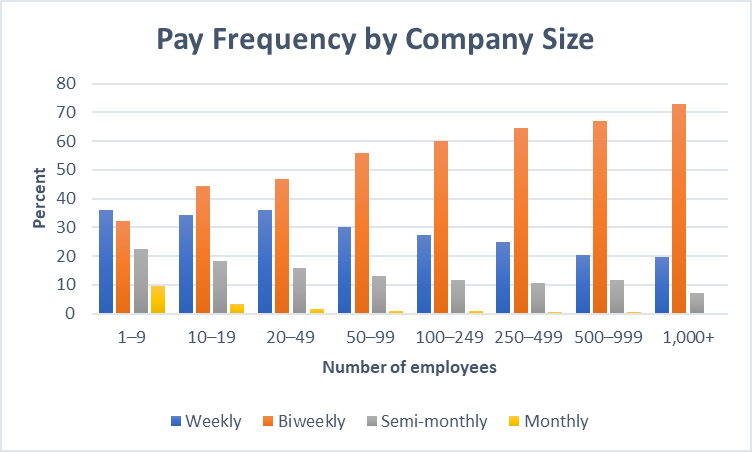
How do you figure out whether weekly, bi-weekly, semi-weekly—or even a combination of the three—would be the most optimal pay period schedule for your business?

Factors like employee preferences and labor laws are obvious considerations. But you also want a frequency that attracts and retains top performers and balances administrative costs with talent management goals.

Don’t worry, it isn’t as complicated as it sounds. Read on as I discuss the basics of pay periods, as well as tools and tips to help you improve your payroll.

What Are Pay Periods?

Pay periods are recurring lengths of time over which employee wages are calculated and paid.

The Fair Labor Standards Act (FLSA) has made it mandatory for businesses to pay employees on their “regular payday.“ But it hasn’t specified how often these paydays must come. States have taken matters into their own hands and set standards through payday frequency laws.

The most common pay periods are weekly, biweekly, semi-monthly, and monthly. While paying semi-monthly is still deemed acceptable, no state allows bi-monthly pay schedules at the moment.

How often you pay employees is a crucial decision because it directly affects recruiting and retention. It also means you should always be able to deliver paychecks consistently based on the schedule you select.

Missing payday, even by a day or two, can lead to employee resentment and opens you up to FLSA complaints…. Read More

The Beginners Guide to Remote Employees

While remote work at one point was a rarity for companies, that has changed dramatically in recent history. Studies done by Stanford economist Nicholas Bloom show that, as of June 2020, 42% of the labor force in the United States is working from home full-time. Though those numbers have likely dropped a bit since then with people returning to work, there is no denying that a large population of the American workforce will continue to work from home.

If your company is one such company that has decided to allow employees to work remotely either full-time or just a few hours a week, you must have processes and systems in place that allow things to run smoothly with your remote employees. Without things properly set up, remote working can get complicated.

To help you successfully navigate the new-to-you remote world, we have created this guide. In it, you will find all you need to know about remote employees.

What Are Remote Employees?

Remote employees are people that work outside their company’s physical office. For some people, this may mean their home. In the last year, many people have transformed their homes into fully functional home offices that serve as a great place for them to do their work.

For other people, working remotely may mean being a digital nomad that works from somewhere other than their home-–potentially a hotel or coffee shop in a foreign country! Whatever the employee’s choice of location, them working remotely means… Read More

The Beginners Guide to Office Perks

Office perks can liven up the workplace and have a big impact at a small expense. When you create yours, you should start by knowing what your employees want and how it reflects your workplace culture.

Perks can help your employees enjoy their jobs even more. Here are the basics to offering them at your company.

What are Office Perks?

Office perks, sometimes called fringe benefits, are non-wage offerings for employees. In other words, they’re not the same as benefits like insurance and paid leave, or bonuses given out as rewards for performance.

Office perks relate more to company culture, and they look different for every business. That makes them somewhat difficult to define, but they should reflect and support the work experience you want to build for your employees.

They’re not meant to be used to distract employees from bigger issues, like leadership problems, or to relate directly to employees’ work at all. Instead, they should improve employee well-being and support your team in their work and lives.

The Basics of Office Perks

Office perks come in many forms, and the ones at your company won’t look the same as those at someone else’s.

Here are a few things you should know about office perks before you decide what to offer.

Purchasable Perks

As the name suggests, purchasable perks are those you can buy for your employees.

Many people know these as catered lunches or company outings, but they can extend… Read More

Business Formation Study: How are Businesses in the US Structured?

There are approximately 100 billion decisions you have to make when starting a business.

Okay, maybe that’s a small exaggeration—but you know how many critical choices demand your attention as a business owner.

One of the earliest and most important decisions you’ll make is what type of business you want to create. I’m not talking about favoring online versus physical stores or selling products versus services; this is about the type of legal form your business should take.

This determines how you’re taxed, your personal liability, how you raise money, and what happens to your business should something happen to you, to list a few considerations.

That’s why we wanted to do a deep dive on business formations today. We want to take a look at how businesses are structured in the United States and what exactly that might mean for you as you get your business off the ground.

Let’s jump in.

Disclaimer: This study is based on U.S. business formations. Apologies to our international readers out there! But we think you’ll find the information here helpful especially if you conduct business with a U.S.-based client, partner, or vendor.

The 5 most common types of business structures in the US

There are many different types of business structures out there. However, we want to take a look at the five most common types, and what that might mean for you.

They are:

Sole Proprietorships
Limited Liability Companie… Read More