The Beginner’s Guide to Vision and Mission Statements

Running a successful business involves careful planning and focus. Part of the process includes setting goals and determining a clear-cut purpose.

Two elements critical in defining your business objectives are your vision statement and mission statement. These documents state and summarize your short-term and long-term goals, which is also why the lines get blurry with them. 

Each statement serves a different purpose: a mission statement describes what a company wants to do now; a vision statement outlines what it wants to do in the future.

Let’s dive deeper into vision and mission statements to understand why they’re crucial for your business and discuss how you can create these documents for your own business.

What Are Vision and Mission Statements?

Before decoding the similarities and differences, let’s define each of them further.

What is a Vision Statement?

A vision statement is a brief, clear, and definitive description of a company‘s aspirations and the kind of impact it aims to create. Think of it as a guiding beacon that tells people within the organization what the business wants to accomplish and what will happen once they achieve that vision. 

It helps facilitate internal decision-making and determines the intended direction of the organization. You can also use it to describe the future of the business while simultaneously emphasizing its overall purpose.

To put thing… Read More

How and When to Trademark a Business Name

You likely spent a lot of time thinking up the perfect name for your business–it’s one of the first and most exciting things you do when you start a new business.

So it would be beyond frustrating if another biz popped up with a similar name to yours. 

Plus, you’d potentially have to go through a tiresome and expensive rebranding process if you don’t have any protections. 

But when you register a trademark you have complete ownership over your business name.

The only problem is registering a trademark is not the easiest thing to do.

So this post will guide you through every step of registering a business name with the United States Patent and Trademark Office (USPTO).

The Easy Parts of Trademarking a Business Name

A Clear Application

Trademarking a business name is simpler than trademarking your branding, i.e. your logo, slogan, and so on. There are fewer steps involved in the prep and application phases.

Furthermore, the application you’ll complete to register your trademark is relatively clear and straightforward and contains a lot of explanatory information you can refer to as you go along.

Apply On Your Own Schedule

If you file for your trademark using TEAS Standard, you can submit some of the required information in the initial application and some at a later date. You can also pay the application fee in two installments.

These aspects take some o… Read More

How to Start a Business from Scratch: 24 Steps to Becoming Operational

Starting a business is one of the best things you can do to build wealth.

It can be daunting. But with the right systems, it can be made easy.

The good news is that all of the things that need to get done in order to start your business have been done a million times before. Even if you’re starting from scratch, you don’t need to reinvent the wheel or waste brainpower on figuring out what to do.

There are at least 24 things that you should do when starting a new business and I will walk you through each one of them step-by-step.

I’m going to assume you already have a business idea, and I’m not going to show you how to build or grow your business in this article. These are the practical steps necessary to begin operations.

How to Start a Business in 24 Steps

Below are the 24 steps to starting a business:

Put together a very high level and basic business plan
Come up with a name
Buy your domain name
Secure social media accounts
Develop a brand identity
Set up a G Suite account
Create a basic, foundational website
Get some business cards
Find an accountant and an attorney
Set up an LLC
Get an EIN
Create an operating agreement
File necessary paperwork with your state
Open a business bank account
Set up a payroll service for employees and contractors
Set up QuickBooks
Put a basic accounting system in place
Start using a project management solution from day one
Build an internal wiki system from day one
Set up a Slack a… Read More

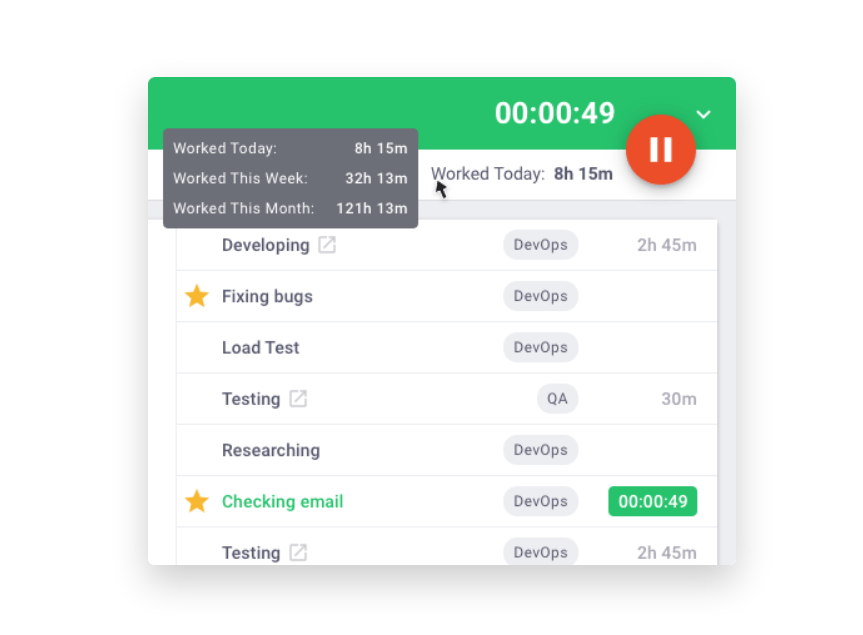
Time Doctor Review

It’s not hard to guess what Time Doctor does best by reading the name. 

In the productivity space, it’s the employee time tracking software you want to have around if you’re serious about saving thousands of dollars a year in lost time. 

Unlike other time tracking tools, Time Doctor is known for being highly customizable and can easily work for both remote and in-house teams (or a hybrid of both).

Below, we dive deep into the specifics of what sets Time Doctor apart, the pros and cons of onboarding the tool, and what pricing options you have if you decide to use it. 

Let’s take a closer look. 

Time Doctor Pros and Cons

Pros

Comes with an appHas option for automated time trackingOffers client login access through its Premium planYou can track tasks and activities in real timeOffers data storage and screenshot featuresHighly adaptable to any businessAvailable for Window, Mac, or Linux operating systemsIntegrates with a number of popular business and payroll software

Cons

Can get expensive the more users you need to addMinor usage glitches reported by usersIts manual setting can be inaccurate if you forget to set them correctlyUser interface isn’t as modern as it could be

Time Doctor Features

Knowing the pros and cons can be a quick way of assessing just how useful Time D… Read More